ICOMOS Lebanon

Byblos in Paris

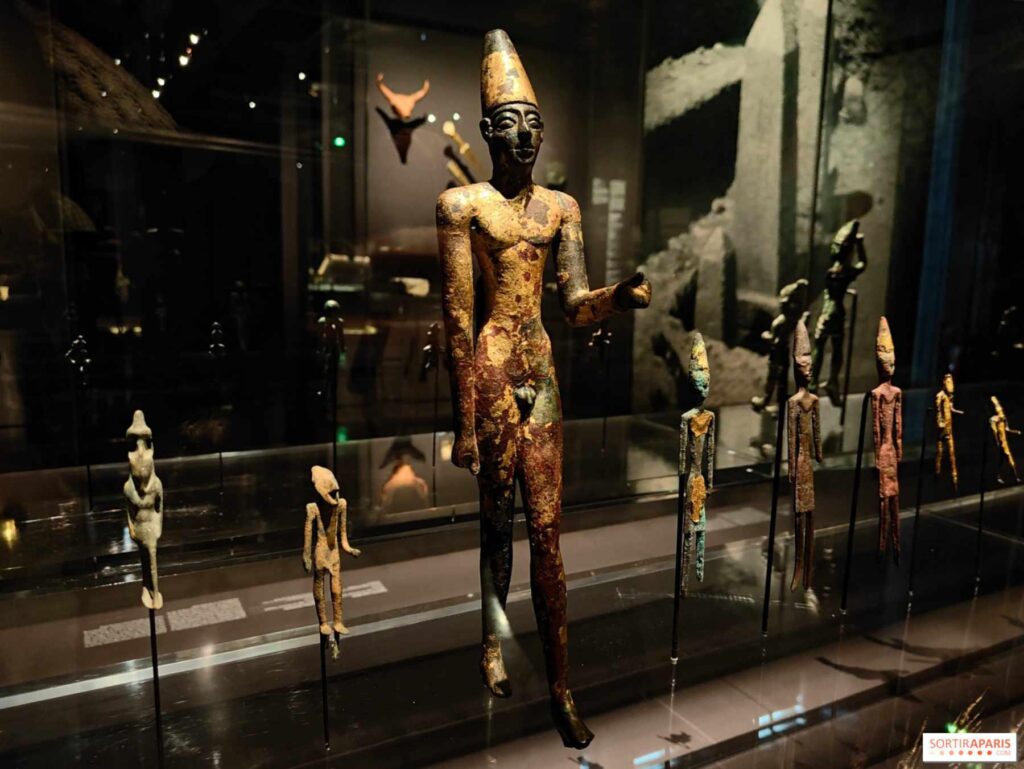
“Byblos in Paris”: Macron Highlights Lebanese Heritage and Calls for Its Protection March 29, 2026 ICOMOS Lebanon Source Byblos, Cultural Heritage Protection, Lebanese Cultural Heritage French President Emmanuel Macron officially opened the exhibition “Byblos in Paris”, dedicated to showcasing the historical and cultural richness of Lebanon’s heritage. The exhibition focuses on the ancient city of Byblos, presenting its long history and archaeological significance to an international audience, and reaffirming its status as one of the world’s oldest continuously inhabited cities. Speaking at the event, Macron underlined the importance of protecting cultural heritage, particularly in regions affected by conflict. He warned against threats to heritage sites and stressed that such landmarks must be preserved as part of a shared human legacy. The initiative takes place against a backdrop of ongoing regional tensions, drawing attention to the risks faced by cultural sites in Lebanon and across the Middle East. It also reinforces the broader call for adherence to international frameworks aimed at safeguarding heritage during times of crisis. Byblos: The Millennial City of Lebanon is open until August 23, 2026 at the Arab World Institute.
Byblos in Paris Read More »

ICOMOS Statement on the Protection of Cultural Heritage Amid Escalating Conflict

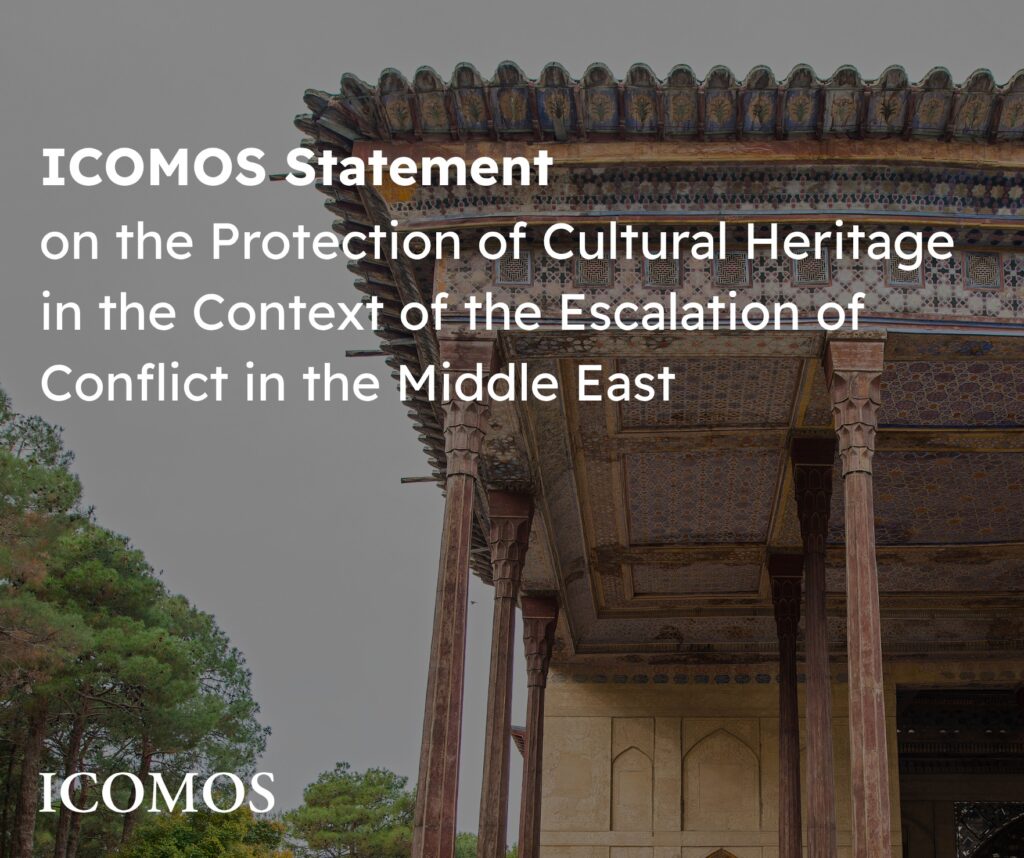
ICOMOS Statement on the Protection of Cultural Heritage Amid Escalating Conflict March 26, 2026 ICOMOS Lebanon Source Armed Conflict, Cultural Heritage Protection, ICOMOS Statement ICOMOS Lebanon aligns with the position of ICOMOS International and reiterates its deep concern regarding the recent escalation of conflict in the Middle East and its devastating human consequences, including the loss of life, increasing casualties, and the displacement of populations, with serious implications for cultural continuity. ICOMOS strongly condemns any destruction – whether intentional or incidental-of cultural and natural heritage, and recalls that cultural heritage must never be considered a target. Serious concern is raised over confirmed and reported damage to cultural heritage across the region, including impacts on several World Heritage properties. These include damage to sites such as the archaeological site of Tyre. Such incidents highlight the risk of irreversible loss. Cultural heritage constitutes an essential component of social structures, sustaining identity, continuity, and cohesion, particularly in times of crisis and displacement. ICOMOS recalls the obligations set out under the 1954 Hague Convention for the Protection of Cultural Property in the Event of Armed Conflict and its Protocols. It further notes that serious violations, including the destruction of cultural property, may entail individual criminal responsibility under international humanitarian law, including under the Rome Statute of the International Criminal Court. ICOMOS calls on all parties to fully respect their obligations under international law and to ensure the protection of cultural heritage and the communities who sustain it.

ICOMOS Statement on the Protection of Cultural Heritage Amid Escalating Conflict Read More »

Enhanced Protection Blue Shield Emblems Placed on Heritage Sites in Tyre

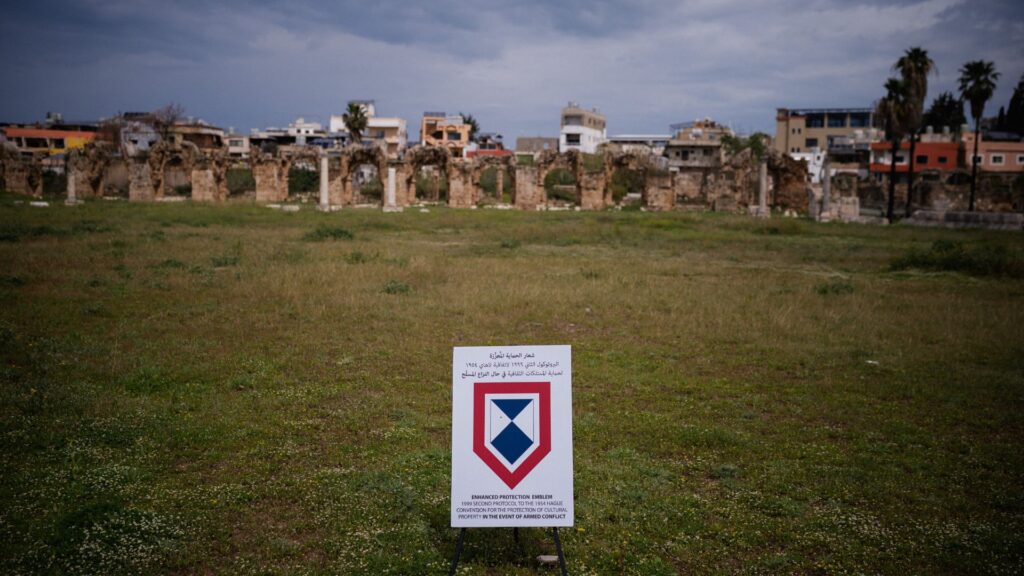
Enhanced Protection Blue Shield Emblems Placed on Heritage Sites in Tyre March 25, 2026 ICOMOS Lebanon Source 1954 Hague Convention, Enhanced Protection, Tyre Archaeological Site Enhanced Protection Blue Shield emblems have been installed on several archaeological and cultural sites in Tyre, identifying them as cultural property placed under enhanced protection in accordance with the 1954 Hague Convention for the Protection of Cultural Property in the Event of Armed Conflict and its Second Protocol. This marking formally designates the highest level of protection granted under the Convention, recognizing the exceptional cultural and historical value of these sites. It reinforces their status as heritage of major importance that must be safeguarded and remain strictly protected from use or targeting in the event of armed conflict. The placement of these outlined emblems comes amid increasing concern regarding the exposure of cultural heritage in southern Lebanon. In this context, the designation constitutes a clear reminder of the binding obligations incumbent upon all parties to ensure the respect and protection of cultural property under international humanitarian law.

Enhanced Protection Blue Shield Emblems Placed on Heritage Sites in Tyre Read More »

Ensemble of Historical Monuments and Natural Sites of the Village of Menjez

Tentitive Sites Ancient City of Tripoli Quote Title Text Title 2 Text Title Text Quick Facts Region                                Bekaa Valley Period                                Phoenician / Roman Date of Submission         2019 Criteria                               (iii)(iv) View on UNESCO Open User Map This block will show your Locations on a map in the front end. Custom Map Position (optional): Latitude Longitude Zoom Filter Locations (optional): Filter by Marker Categories [PRO] Filter by POST IDs Witness damage or threat to this site? Report it immediately. Report a Threat Report

Ensemble of Historical Monuments and Natural Sites of the Village of Menjez Read More »

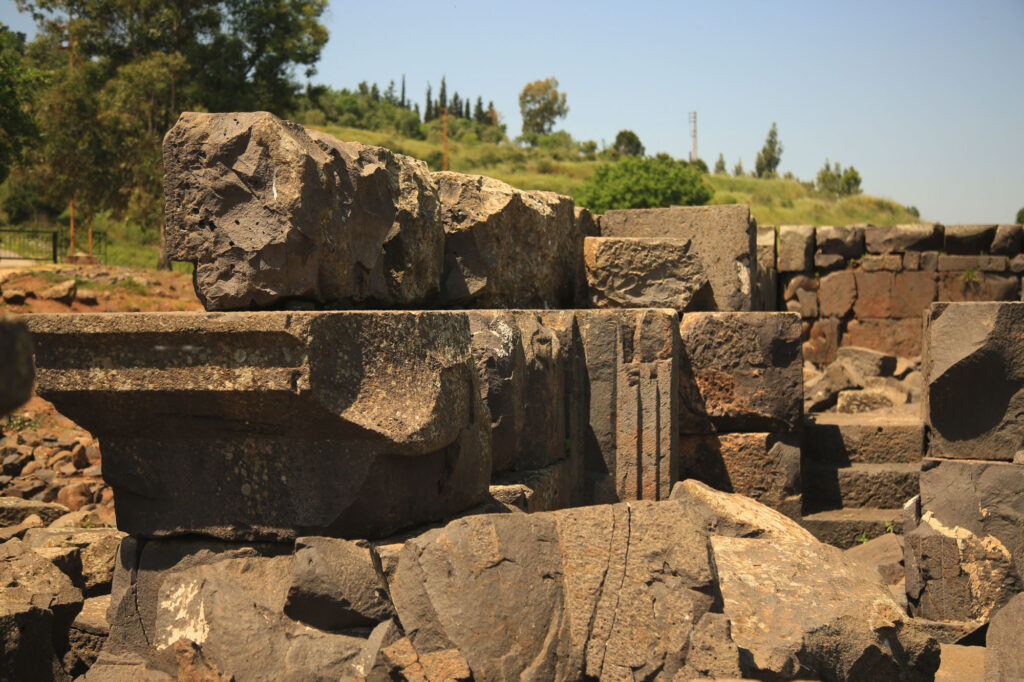
Ancient City of Tripoli​

Tentitive Sites Ancient City of Tripoli Quote Title Text Title 2 Text Title Text Quick Facts Region                                Bekaa Valley Period                                Phoenician / Roman Date of Submission         2019 Criteria                               (iii)(iv) View on UNESCO Open User Map This block will show your Locations on a map in the front end. Custom Map Position (optional): Latitude Longitude Zoom Filter Locations (optional): Filter by Marker Categories [PRO] Filter by POST IDs Witness damage or threat to this site? Report it immediately. Report a Threat Report

Ancient City of Tripoli​ Read More »

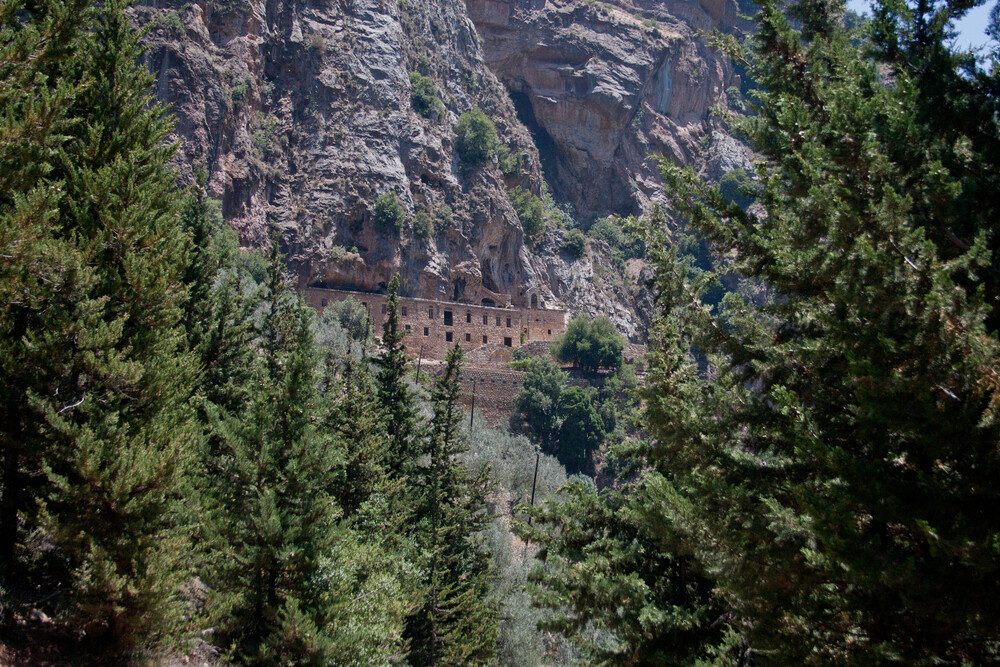
Monastery buildings set into the rocky cliffs of the Qadisha Valley, Lebanon, surrounded by dense forest.

The Holy Valley (Qadisha) and the Forest of the Cedars of God

World Heritage Site The Holy Valley (Qadisha) and the Forest of the Cedars of God The Holy Valley and its ancient cedars form one of the most important early Christian monastic landscapes. Historical Significance The Qadisha Valley has served as a refuge for religious communities since the earliest centuries of Christianity. The Temple Complex At the head of the valley stands one of the last remaining groves of the Cedars of Lebanon. Photo © Sara Calado / Unsplash Spiritual & Natural Heritage The inscribed property uniquely combines cultural and natural heritage. Quick Facts Region                    North Lebanon Period                    4th century – present Inscribed               1998 Criteria                  (iii)(iv) View on UNESCO Open User Map This block will show your Locations on a map in the front end. Custom Map Position (optional): Latitude Longitude Zoom Filter Locations (optional): Filter by Marker Categories [PRO] Filter by POST IDs Witness damage or threat to this site? Report it immediately. Report a Threat Report

The Holy Valley (Qadisha) and the Forest of the Cedars of God Read More »

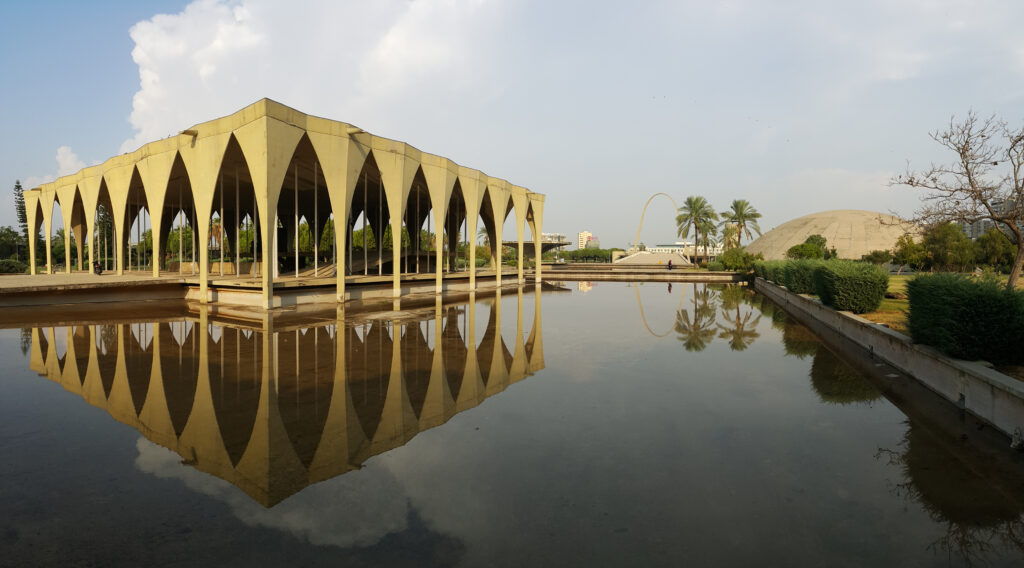
Rachid Karami International Fair-Tripoli

World Heritage Site Rachid Karami International Fair -Tripoli A masterpiece of Modernist architecture by Oscar Niemeyer, Lebanon’s most recent UNESCO inscription. Historical Significance Commissioned in 1962, the fairground was designed by the legendary Brazilian architect Oscar Niemeyer. Architectural Vision The complex spans approximately 70 hectares and features 15 structures including a sweeping experimental theater. Photo © Jad Tabet / UNESCO Conservation & Future The site’s inscription on the World Heritage List in 2023 marked a significant milestone for Lebanon’s modern heritage. Quick Facts Region                   Tripoli Inscribed               2023 Criteria                  (ii)(iv) View on UNESCO Open User Map This block will show your Locations on a map in the front end. Custom Map Position (optional): Latitude Longitude Zoom Filter Locations (optional): Filter by Marker Categories [PRO] Filter by POST IDs Witness damage or threat to this site? Report it immediately. Report a Threat Report

Rachid Karami International Fair-Tripoli Read More »

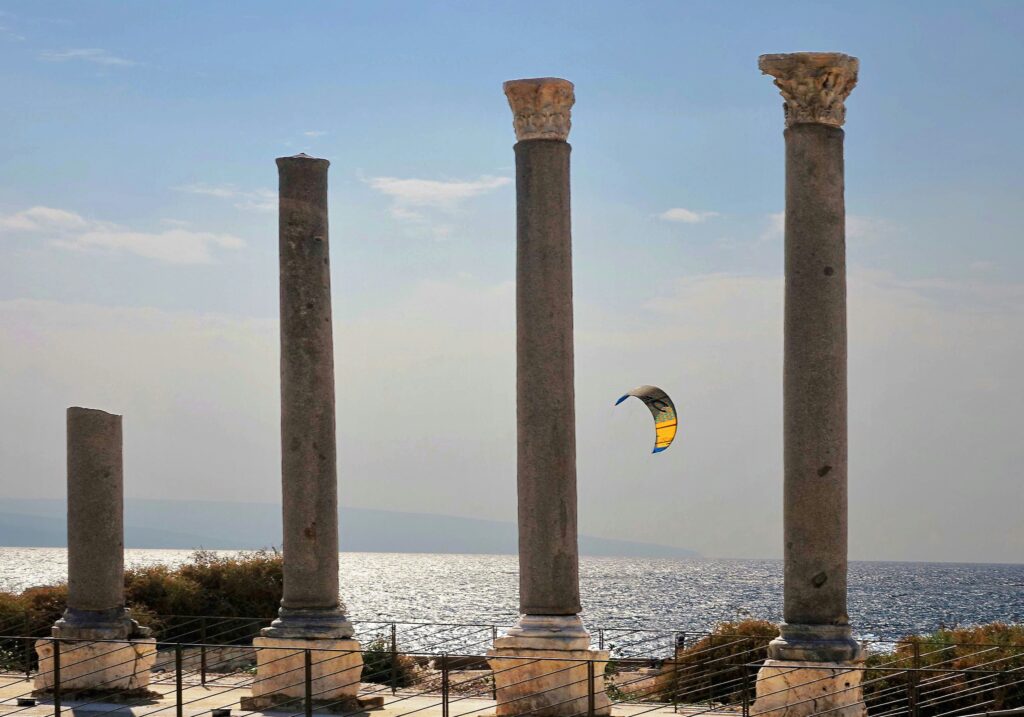
Stone columns of the ancient ruins of Tyre, Lebanon, standing along the Mediterranean coast with the sea in the background.

Tyre

World Heritage Site Tyre Once the great Phoenician maritime power, Tyre’s archaeological remains reveal millennia of Mediterranean civilization. Historical Significance Founded around the third millennium BCE, Tyre rose to become the dominant Phoenician city-state. Archaeological Sites Tyre’s archaeological area includes one of the largest and best-preserved Roman hippodromes ever discovered. Photo © Tim Broadbent / Unsplash The Living Heritage According to legend, purple dye was invented in Tyre. This great Phoenician city ruled the seas and founded prosperous colonies such as Cadiz and Carthage, but its historical role declined at the end of the Crusades. There are important archaeological remains, mainly from Roman times. Quick Facts Region                    South Lebanon Period                    Phoenician / Roman / Byzantine Inscribed               1984 Criteria                   (iii)(vi) View on UNESCO Open User Map This block will show your Locations on a map in the front end. Custom Map Position (optional): Latitude Longitude Zoom Filter Locations (optional): Filter by Marker Categories [PRO] Filter by POST IDs Witness damage or threat to this site? Report it immediately. Report a Threat Report

Tyre Read More »

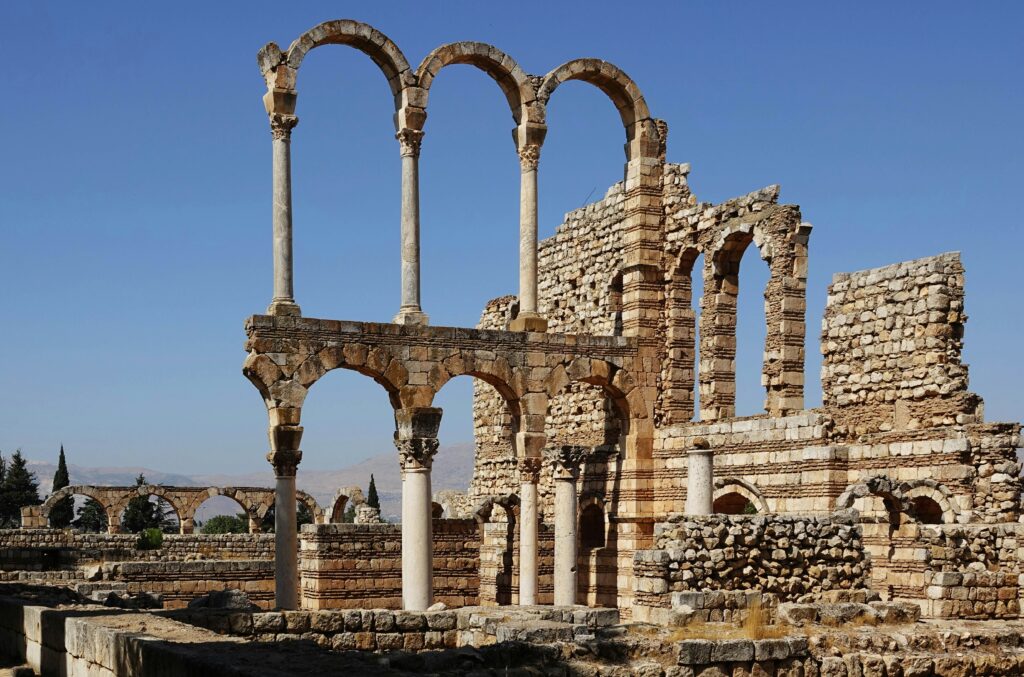
Ruins of the Umayyad city of Anjar in Lebanon, showing stone arches and columns of a Roman-influenced structure under a clear blue sky.

Anjar

World Heritage Site Anjar A unique testimony to the Umayyad civilization, Anjar’s ruins reveal an exceptionally well-planned early Islamic city. Historical Significance Founded by Caliph Walid I at the beginning of the 8th century, Anjar stands as the only example of an inland commercial center from the Umayyad period. Architecture & Layout The rectangular city plan measures approximately 385 by 350 meters, enclosed by fortified walls with semicircular towers and a gateway at each cardinal point. Anjar – Captured by Conservation Challenges Anjar faces ongoing threats from urban encroachment and agricultural expansion in the Bekaa Valley. Quick Facts Region                   Bekaa Valley Period                    Umayyad (8th century) Inscribed               1984 Criteria                   (iii)(iv) View on UNESCO Open User Map This block will show your Locations on a map in the front end. Custom Map Position (optional): Latitude Longitude Zoom Filter Locations (optional): Filter by Marker Categories [PRO] Filter by POST IDs Witness damage or threat to this site? Report it immediately. Report a Threat Report

Anjar Read More »

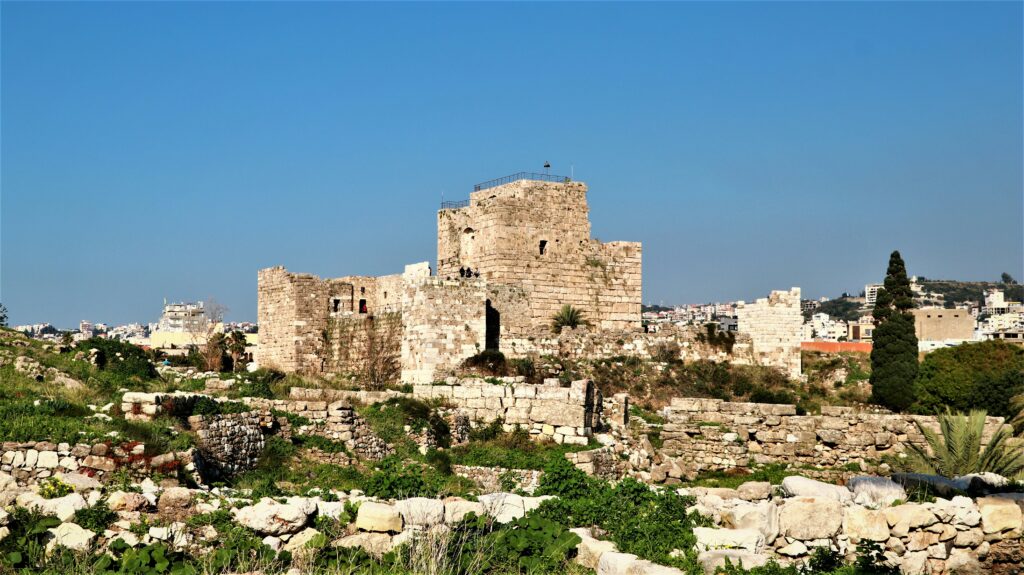
stone fortifications of the byblos citadel, lebanon, surrounded by archaeological remains and greenery under a clear sky.

Byblos

World Heritage Site Byblos One of the oldest continuously inhabited cities in the world, Byblos is where the Phoenician alphabet was born. Historical Significance Inhabited since at least 5000 BCE, Byblos (Jbeil) is considered one of the oldest cities in the world with continuous habitation. It was the most important Phoenician port from which cedar wood and papyrus were shipped across the Mediterranean. The very word ‘Bible’ derives from the Greek name for Byblos, a testament to its association with writing and trade in papyrus scrolls. The city played a crucial role in the diffusion of the Phoenician alphabet, the ancestor of virtually all modern alphabets. Archaeological Layers Walking through Byblos is like reading an open book of human civilization. The site contains Neolithic dwellings, Chalcolithic houses, Early Bronze Age temples, Egyptian-influenced structures, a Phoenician royal necropolis, Persian fortifications, a Roman colonnade and amphitheater, a Crusader castle, and Ottoman-era architecture. Each layer coexists, creating a palimpsest of Mediterranean history that spans seven millennia. Byblos – Captured by Ali Hamada Modern Byblos Today, Byblos thrives as a charming coastal town where the ancient port is lined with restaurants and the medieval souk bustles with artisan shops. The city successfully balances tourism with heritage conservation, serving as a model for sustainable cultural tourism in the region. Annual festivals, including a renowned international music festival, ensure the city’s cultural vitality continues into the modern era. Quick Facts Region                   Mount Lebanon Period                    Neolithic – Ottoman Inscribed               1984 Criteria                  (iii)(iv)(vi) View on UNESCO Open User Map This block will show your Locations on a map in the front end. Custom Map Position (optional): Latitude Longitude Zoom Filter Locations (optional): Filter by Marker Categories [PRO] Filter by POST IDs Witness damage or threat to this site? Report it immediately. Report a Threat Report

Byblos Read More »