News

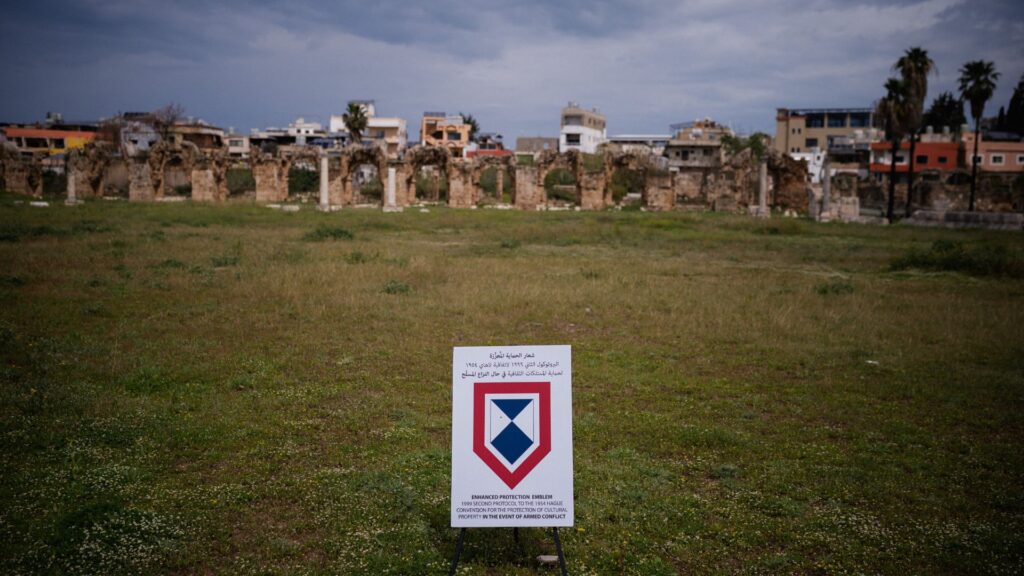
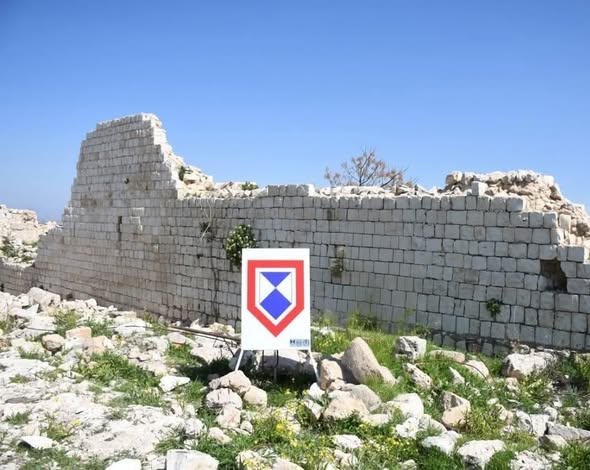
Ancient stone wall of Chamaa citadel with Blue Shield protection sign in the foreground

A Protected Site, Unprotected Reality: The Attack on Chamaa

A Protected Site, An Unprotected Reality: The Attack on the Citadel of Chamaa April 13, 2026 ICOMOS Lebanon Source Armed Conflict, Blue Shield, Enhanced Protection, Hague Convention 1954 In the wake of escalating hostilities and repeated attacks on cultural heritage across Lebanon, ICOMOS Lebanon expresses its deep concern and unequivocal condemnation following the severe targeting of the historic site of Chamaa and the village enclosed within the walls of its ancient citadel. A Site Under Enhanced Protection Chamaa is not an ordinary site. It is recognized for its outstanding cultural significance and is inscribed on the Enhanced Protection List under the 1954 Hague Convention for the Protection of Cultural Property. This designation represents the highest level of international legal protection granted to cultural heritage in times of armed conflict. As outlined in the 2026 ICOMOS Lebanon coverage of the Fifth Extraordinary Meeting, Lebanon secured enhanced protection status for 39 of its most vulnerable cultural sites in addition to the 34 previously listed sites following escalating threats in 2024. This recognition was not symbolic; it imposed binding obligations on all parties to refrain from targeting, damaging, or using these sites for military purposes. Among these, the Citadel of Chamaa holds exceptional cultural and religious importance. It is not merely an architectural landmark, but a place where Christian and Islamic traditions intersect. Revered across faiths, the site reflects centuries of coexistence and spiritual continuity in southern Lebanon. Historical and religious sources converge on the elevated status of Simon Cephas, known in Arabic as Shamaoun al-Safa, one of the foremost disciples of Jesus Christ and bearer of the title “Rock of the Church.” According to local traditions, the citadel represents, for Christians, a sacred link to Saint Peter, regarded as the founder of the Apostolic See and a missionary in the Levant. For Muslims, it is tied to the legacy of Prophet ʿĪsā (Jesus) and his entrusted disciple, revered as a guardian of divine knowledge and often honored among the prophets or righteous saints who paved the way for later revelations. The Citadel of Chamaa was never merely a religious shrine; it stood as a symbol of coexistence. Within its walls, Islamic and Christian narratives met under one roof, making it a living model of southern Lebanon’s diverse and open identity. A Repeatedly Damaged Heritage Landscape The attack on Chamaa is not an isolated incident. The site has already suffered damage in previous conflicts and has undergone extensive restoration efforts over the years. Its destruction today represents the erasure of layers of history that communities have worked tirelessly to preserve. Beyond its architectural and archaeological value, Chamaa is a living heritage site, a village embedded within its historic fabric, where memory, identity, and daily life intersect. The targeting of such a site is therefore not only a violation of international law, but a direct assault on the cultural continuity and dignity of its people. For further context on Lebanon’s cultural assets at risk, refer to the ICOMOS Lebanon heritage sites overview, which details those granted enhanced protection status, including the Chamaa Citadel, officially added to the list in 2024. A Breakdown of Protection Mechanisms This attack highlights a deeply concerning reality: even the highest levels of international protection are failing to prevent the destruction of cultural heritage in active conflict zones. Despite multiple statements and alerts issued by UNESCO and ICOMOS International, and despite the legal frameworks established under international conventions, violations continue with alarming frequency. This raises critical questions about enforcement, accountability, and the effectiveness of existing protection mechanisms in contemporary warfare contexts. Call to Action In light of these developments, ICOMOS Lebanon calls upon: The international community Relevant United Nations bodies Cultural and heritage institutions to take immediate and concrete action: Uphold and enforce international conventions protecting cultural heritage Strengthen monitoring and response mechanisms in conflict zones Ensure accountability for violations of international cultural protection frameworks Heritage Protection as a Foundation for Peace Protecting cultural heritage is not a secondary concern in times of war. It is inseparable from the protection of human life, dignity, and identity. The destruction of heritage is often a precursor – or a companion – to the destruction of communities themselves. Safeguarding sites like Chamaa is therefore not only about preserving the past, but about defending the foundations of peace, resilience, and collective memory. Video Evidence of the Attack, trending on 𝕏 https://lebanon.icomos.org/wp-content/uploads/2026/04/Historic-site-of-Chamaa-Ancient-Citadel-Video.mp4

A Protected Site, Unprotected Reality: The Attack on Chamaa Read More »
5th extraordinary meeting of the Committee : Enhanced Protection for Cultural Heritage in Lebanon

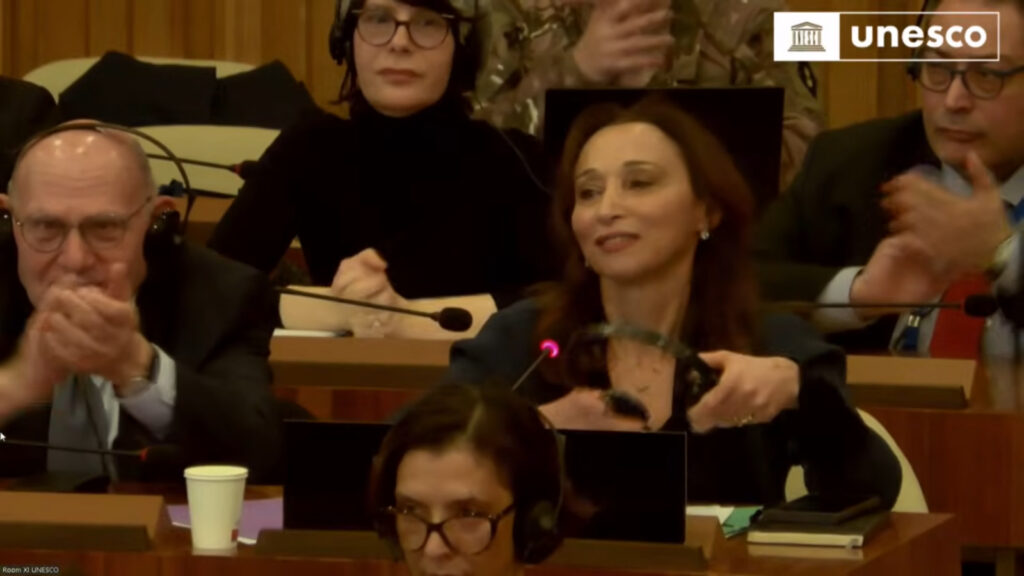
5th extraordinary meeting of the Committee : Enhanced Protection for Cultural Heritage in Lebanon H.E. Hind Ghrayeb, Permanent Delegate of Lebanon to UNESCO April 1, 2026 ICOMOS Lebanon Source Armed Conflict, Blue Shield, Enhanced Protection, Hague Convention 1954 In 2024, following escalating hostilities and direct threats to cultural heritage, Lebanon formally requested international protection for its most vulnerable sites. Responding to this urgent appeal, UNESCO granted Enhanced Protection to 34 cultural properties under the 1954 Hague Convention, placing them under the highest level of legal protection against attack and military use. This unprecedented decision reflected both the severity of the risks faced by Lebanon’s heritage and its recognition as a shared heritage of humanity requiring immediate safeguarding. Building on this milestone, the Fifth Extraordinary Meeting of the Committee for the Protection of Cultural Property in the Event of Armed Conflict has now extended Enhanced Protection to 39 cultural properties in Lebanon. This expansion underscores the international community’s strong commitment to safeguarding the country’s cultural heritage amid ongoing threats and instability. The inscription of these properties on the International List of Cultural Property under Enhanced Protection highlights their outstanding significance for humanity and the urgent need for coordinated protective measures. Enhanced Protection, established under the Second Protocol (1999) to the 1954 Hague Convention, provides the highest level of legal immunity. It ensures that protected sites cannot be targeted by military attack or used for military purposes. Any violation constitutes a serious breach of international law and may lead to criminal responsibility. The Blue Shield emblem symbolizes the collective efforts of Lebanese national institutions, international and local organizations, and dedicated experts working together to protect these sites and strengthen cultural resilience in times of armed conflict. This achievement is the result of a sustained collective effort. At its core stands the dedicated work of the Directorate General of Antiquities (DGA) team in Lebanon, whose commitment, technical preparation, and continuous follow-up were instrumental in bringing this process to completion. This was carried forward in close coordination with the UNESCO Beirut Office, whose support and facilitation played a key role throughout. The process was further strengthened by the engagement of the UNESCO Secretariat, the support of the States Parties that endorsed Lebanon’s request, and the valuable financial and technical contributions of observers. Together, these combined efforts demonstrate the strength of collaborative action in protecting cultural heritage. They ensure that Lebanon’s cultural properties now benefit from the highest level of international protection, reaffirming their value not only at the national level, but for humanity as a whole. Consult the full list of protected sites: here 5th extraordinary meeting of the Committee

5th extraordinary meeting of the Committee : Enhanced Protection for Cultural Heritage in Lebanon Read More »

ICOMOS Statement on the Protection of Cultural Heritage Amid Escalating Conflict

ICOMOS Statement on the Protection of Cultural Heritage Amid Escalating Conflict March 26, 2026 ICOMOS Lebanon Source Armed Conflict, Cultural Heritage Protection, ICOMOS Statement ICOMOS Lebanon aligns with the position of ICOMOS International and reiterates its deep concern regarding the recent escalation of conflict in the Middle East and its devastating human consequences, including the loss of life, increasing casualties, and the displacement of populations, with serious implications for cultural continuity. ICOMOS strongly condemns any destruction – whether intentional or incidental-of cultural and natural heritage, and recalls that cultural heritage must never be considered a target. Serious concern is raised over confirmed and reported damage to cultural heritage across the region, including impacts on several World Heritage properties. These include damage to sites such as the archaeological site of Tyre. Such incidents highlight the risk of irreversible loss. Cultural heritage constitutes an essential component of social structures, sustaining identity, continuity, and cohesion, particularly in times of crisis and displacement. ICOMOS recalls the obligations set out under the 1954 Hague Convention for the Protection of Cultural Property in the Event of Armed Conflict and its Protocols. It further notes that serious violations, including the destruction of cultural property, may entail individual criminal responsibility under international humanitarian law, including under the Rome Statute of the International Criminal Court. ICOMOS calls on all parties to fully respect their obligations under international law and to ensure the protection of cultural heritage and the communities who sustain it.

ICOMOS Statement on the Protection of Cultural Heritage Amid Escalating Conflict Read More »

Enhanced Protection Blue Shield Emblems Placed on Heritage Sites in Tyre

Enhanced Protection Blue Shield Emblems Placed on Heritage Sites in Tyre March 25, 2026 ICOMOS Lebanon Source 1954 Hague Convention, Enhanced Protection, Tyre Archaeological Site Enhanced Protection Blue Shield emblems have been installed on several archaeological and cultural sites in Tyre, identifying them as cultural property placed under enhanced protection in accordance with the 1954 Hague Convention for the Protection of Cultural Property in the Event of Armed Conflict and its Second Protocol. This marking formally designates the highest level of protection granted under the Convention, recognizing the exceptional cultural and historical value of these sites. It reinforces their status as heritage of major importance that must be safeguarded and remain strictly protected from use or targeting in the event of armed conflict. The placement of these outlined emblems comes amid increasing concern regarding the exposure of cultural heritage in southern Lebanon. In this context, the designation constitutes a clear reminder of the binding obligations incumbent upon all parties to ensure the respect and protection of cultural property under international humanitarian law.

Enhanced Protection Blue Shield Emblems Placed on Heritage Sites in Tyre Read More »

Blue graphic with the UNESCO logo and the words “UNESCO Statement” centered on a plain background.

UNESCO Calls for Protection of Culture, Education, Media and the Environment Amid Escalating Tensions

UNESCO Calls for Protection of Culture, Education, Media and the Environment Amid Escalating Tensions   Source: UNESCO LinkedIn UNESCO has expressed serious concern over the deteriorating security situation in the Middle East and the growing risks facing education systems, cultural heritage, media professionals, scientific cooperation, and fragile environmental sites. UNESCO calls on all parties to exercise maximum restraint and to take all necessary measures to safeguard education, culture, media, science, and the environment as essential foundations of societies. The Organization has communicated the geographical coordinates of World Heritage properties, sites on national Tentative Lists, and those under Enhanced Protection in order to help prevent damage during ongoing hostilities. UNESCO further recalls the obligations of all parties under international law, including the 1954 Hague Convention for the Protection of Cultural Property in the Event of Armed Conflict and the 1972 World Heritage Convention. It also reiterates the need to protect schools, students, education personnel, journalists, and media professionals in accordance with relevant UN Security Council resolutions.  

UNESCO Calls for Protection of Culture, Education, Media and the Environment Amid Escalating Tensions Read More »

Portraits of Dr. Ghassan Salamé, Minister of Culture of Lebanon, and Dr. Khaled El-Enany, Director-General of UNESCO.

Lebanon Calls on UNESCO to Protect Cultural Heritage During Armed Conflict

  Source/Credit: National News Agency Lebanon (NNA) Summary:The Lebanese Minister of Culture, Ghassan Salameh, contacted Khaled El-Enany, Director-General of UNESCO, requesting intervention to ensure the protection of Lebanon’s cultural heritage amid the current security situation. The request calls on neighboring or belligerent states to respect international conventions protecting cultural property and to refrain from targeting heritage sites, including the National Museum of Beirut, archaeological sites, and properties inscribed on the UNESCO World Heritage List or under enhanced protection. The Minister emphasized that safeguarding these sites is required under international frameworks, including the Hague Convention for the Protection of Cultural Property in the Event of Armed Conflict and the Convention Concerning the Protection of the World Cultural and Natural Heritage. A formal letter was also sent to UNESCO reiterating Lebanon’s request.  

Lebanon Calls on UNESCO to Protect Cultural Heritage During Armed Conflict Read More »

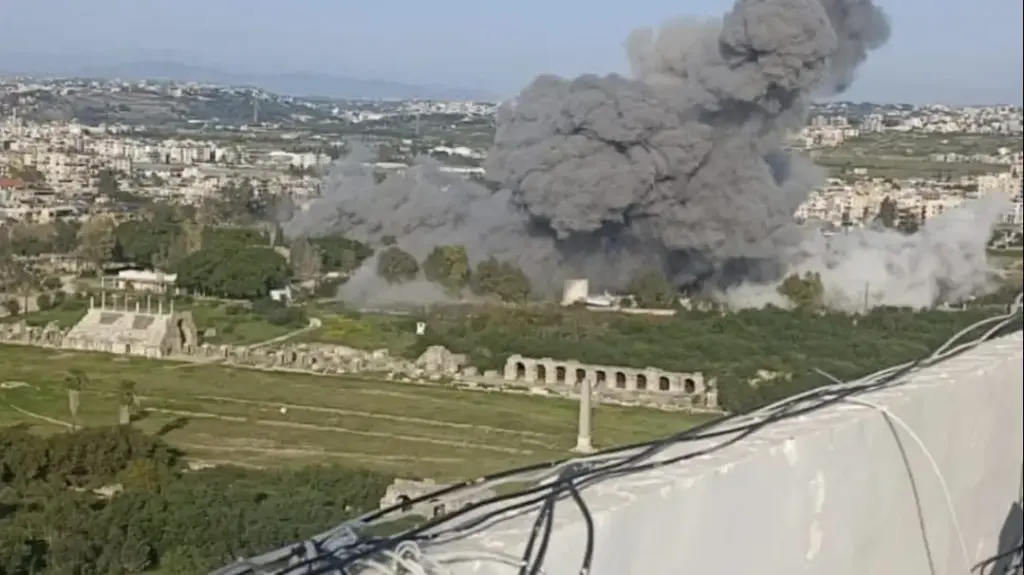
Explosion and large plume of smoke visible near the Al-Bass Archaeological Site in Tyre, Lebanon, a UNESCO World Heritage site.

Damage Reported at Al-Bass Archaeological Site in Tyre

Source/Credit: National News Agency Lebanon (NNA) Summary:Lebanese Minister of Culture Ghassan Salameh condemned the reported damage to parts of the Al-Bass Archaeological Site in Tyre following recent hostilities. He stated that the site, which forms part of the Tyre World Heritage Site, has no military presence and should not be targeted. The site is inscribed on the UNESCO World Heritage List and benefits from enhanced protection under the Hague Convention for the Protection of Cultural Property in the Event of Armed Conflict and its Second Protocol, which require the safeguarding of cultural heritage during armed conflicts.  

Damage Reported at Al-Bass Archaeological Site in Tyre Read More »