ICOMOS Lebanon urgent alert on Beaufort Castle calling for action
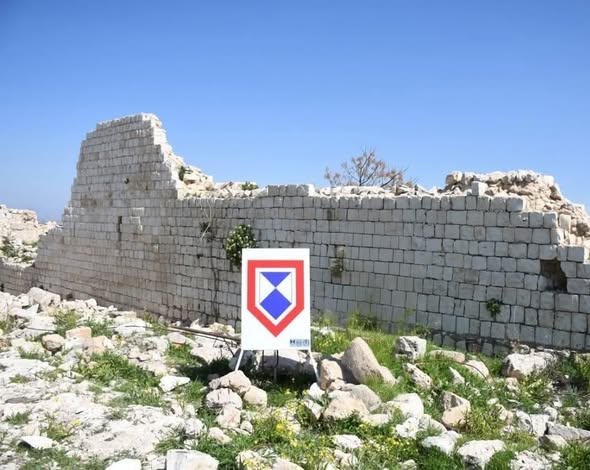
ICOMOS Lebanon Alert on Beaufort July 31, 2026 ICOMOS Lebanon Source I. The Facts on the Ground On the night of 30 to 31 July 2026, the Israeli military detonated approximately 700 tonnes of explosives beneath the ShaKif Ridge, in the immediate vicinity of Beaufort Castle (Qalaat al-Chakif), a component of the Jabal Amel serial property. ICOMOS Lebanon states plainly what this means in heritage terms: a detonation of this scale, directly beneath the ridge on which a 12th-century Crusader fortress stands, cannot be assumed to leave that fortress unaffected. Structures of this age and construction are acutely vulnerable to ground shock, vibration, and subsurface displacement. Given the close proximity of the claimed tunnel network to the castle, no responsible assessment of this operation can proceed on the assumption that a 700-tonne detonation at such proximity leaves the standing structure above it undisturbed. ICOMOS Lebanon calls for an immediate, independent, on-site technical assessment of the structural condition of Beaufort Castle, and reiterates that the absence of a fully documented assessment does not mean the absence of damage — it means the damage has not yet been measured. This detonation is not a surprise development. It follows months of documented, unconfirmed-but-unrefuted reporting that a demolition of this kind was pending political approval. It follows the explicit public warning issued by Lebanon’s Minister of Culture, Ghassan Salamé, who told UNESCO’s Director-General in a letter dated 5 June 2026 that Beaufort Castle was under direct threat of demolition following its capture by Israeli forces on 31 May. And it follows, by a matter of days, one of the most significant acts of international heritage protection in this conflict to date: the inscription, on an emergency basis under Article 11(4) of the 1972 World Heritage Convention, of Beaufort Castle and four other fortresses of the Jabal Amel serial property onto both the World Heritage List and the List of World Heritage in Danger, adopted by the UNESCO World Heritage Committee at its 48th session in Busan on 22–24 July 2026. Eight days after the international community placed Beaufort Castle under its highest level of documented concern, 700 tonnes of explosives were detonated in its direct vicinity and its geological substratum. II. The Applicable Legal Framework ICOMOS Lebanon sets out, with precision, the legal obligations engaged by this act — including Israel’s own specific treaty commitments, which this statement states accurately rather than by inference: Israel acceded to the 1972 UNESCO World Heritage Convention on 6 October 1999, and is fully bound by Article 6(3): States Parties ‘undertake not to take any deliberate measures which might damage directly or indirectly’ World Heritage on the territory of other States Parties. Beaufort Castle was inscribed as World Heritage precisely eight days before this detonation. Israel is a State Party to the 1954 Hague Convention for the Protection of Cultural Property in the Event of Armed Conflict and to its First Protocol. Article 4 of the Convention obliges parties to refrain from any act of hostility directed against cultural property and from any use of such property or its immediate surroundings that is likely to expose it to destruction or damage. ICOMOS Lebanon notes, for the sake of legal precision, that Israel has not acceded to the 1999 Second Protocol to the 1954 Hague Convention, which establishes the specific Enhanced Protection regime and its associated individual criminal responsibility provisions under Article 15. This does not diminish Israel’s obligations under the core 1954 Convention, to which it remains fully bound; it does mean that the Enhanced Protection status UNESCO has conferred on Beaufort Castle carries the full weight of international institutional recognition and concern, even though its specific treaty enforcement mechanism does not extend, by treaty, to a State that has chosen not to accede to it. ICOMOS Lebanon considers this gap itself worthy of international attention: a state conducting large-scale military operations in immediate proximity to a listed World Heritage property should not be permitted to treat a non-accession to one protocol as license to disregard the substance of the protection regime as a whole. UN Security Council Resolution 2347 (2017), binding on all UN member states including Israel, determines that the deliberate destruction of cultural heritage in armed conflict constitutes a threat to international peace and security under Article 39 of the UN Charter. The customary international humanitarian law obligation to take all feasible precautions to avoid, and in any event to minimize, incidental damage to civilian objects — including cultural property — applies regardless of specific treaty accession, and is considered binding on all parties to an armed conflict. Whatever justification is offered for the underlying military objective, the choice of method — a 700-tonne detonation directly beneath an inscribed World Heritage property, days after its inscription, when smaller and more precise alternatives were reportedly available and had already been used at the same site on 13 July — raises a serious question of proportionality and precaution that international law requires be answered, not assumed away. III. From Statements to Action ICOMOS Lebanon has, over the past two months, issued a continuous and escalating record of alerts on precisely this risk. Our Emergency Statement of 27 May 2026 named Beaufort Castle explicitly among the sites under direct threat. Our Alert Statement of 7 June 2026, following the strike on the entrance and administration buildings of the Tyre World Heritage Site, restated the same warning. ICOMOS Lebanon and UNESCO jointly condemned strikes on Beaufort in a statement of 8 June 2026, which recalled that ‘cultural property, particularly when under Enhanced Protection, must not be made the object of attack or used for military purposes.’ Minister Salamé wrote to UNESCO’s Director-General on 5 June 2026 with the same warning. The World Heritage Committee itself, in inscribing Beaufort Castle onto the Danger List only days ago, formally recognized that the site faced ‘ongoing threats from the conflict, serious enough to justify resorting to an emergency procedure.’ Every, and each one of these warnings has now been borne out.
ICOMOS Lebanon urgent alert on Beaufort Castle calling for action Read More »