The 1972 World Heritage Convention

The Convention Concerning the Protection of the World Cultural and Natural Heritage is the main international treaty for safeguarding heritage of global importance. It created the World Heritage List and established an international cooperation system for heritage protection.

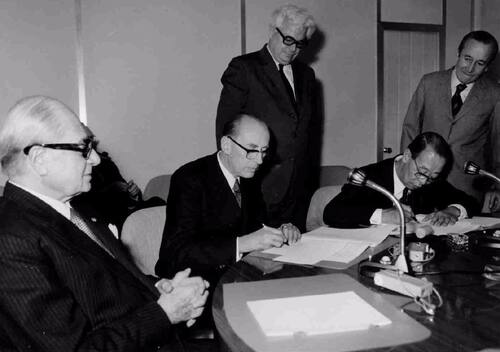
Officials signing the World Heritage Convention during a formal meeting in 1972.

The signature of the World Heritage Convention

A photo showing the "Adoption of the World Heritage Convention in 1972 at UNESCO

© UNESCO
Adopted
1972
Entered into Force
1975
First Inscriptions
1978

States Parties Today
(as of 2025)

0
Lebanon Rattified
1983

The Operational Guidelines, developed in 1978, explain how the Convention is implemented in practice, and the detailed procedures for nominations, evaluations, monitoring, and reporting. Regularly updated by UNESCO.

To decide whether a site can be inscribed on the World Heritage List, four core assessment pillars established in the Operational Guidelines of the World Heritage Convention are applied:

Outstanding Universal Value (OUV) – the entry point and the central concept

The property must have significance that transcends national boundaries and is important for humanity as a whole.

Authenticity – applies to cultural heritage

Cultural heritage must truthfully express its historical values through attributes such as form, materials, traditions, and setting.

Integrity  – applies to both cultural and natural sites

The site must contain all elements necessary to express its value and be protected from major threats.

Protection & Management – the enabling condition

Each property must have an effective management system ensuring its long-term conservation.

The Operational Guidelines

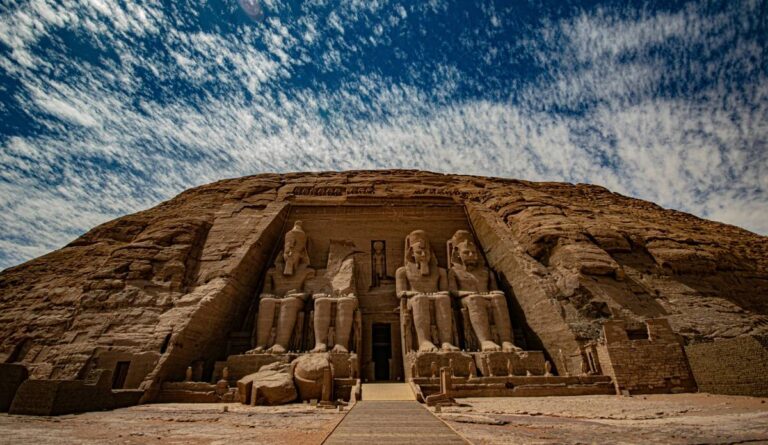
Abu Simbel temple façade with colossal statues of Ramses II in Egypt.

Abu Simbel Temples


The Abu Simbel temples are the direct catalyst for the 1972 UNESCO World Heritage Convention, as the successful 1960s international campaign to move the temples away from the rising Nile (due to the Aswan High Dam) demonstrated that significant monuments could be protected through global solidarity, directly inspiring the international legal framework for protecting cultural and natural heritage.

© Photo by Michael Starkie on Unsplash.
Article 1 - Cultural Heritage Defined

Defines what can be considered cultural heritage: monuments, groups of buildings, and sites of historical, artistic, or archaeological significance.

Each country that ratifies the Convention commits to identifying, protecting, conserving, and transmitting heritage to future generations.

*A State Party is a country that has formally accepted and is legally bound by a specific international treaty, while a Member State is a country that belongs to an international organization such as the UN or EU.

States should integrate heritage protection into planning policies, legislation, and development strategies.

The World Heritage Committee is the body responsible for implementing the 1972 Convention, identifying cultural and natural sites of “Outstanding Universal Value” for the World Heritage List, and making decisions regarding the inscription and conservation of World Heritage properties. The Committee relies on the expertise of specialized advisory bodies, which provide independent technical evaluations and guidance.

The World Heritage Committee invites public or private organizations or individuals to its meetings to be consulted on specific matters. The Committee relies on the expertise of specialized advisory bodies, which provide independent technical evaluations and guidance. 

ICOMOS, IUCN, and ICCROM are the advisory bodies that support the World Heritage Committee.

  • ICOMOS (International Council on Monuments and Sites) evaluates cultural heritage nominations and provides expertise on the conservation of monuments, sites, and cultural landscapes.

  • IUCN (International Union for Conservation of Nature) evaluates natural heritage nominations, including protected landscapes, ecosystems, and biodiversity areas.

  • ICCROM (International Centre for the Study of the Preservation and Restoration of Cultural Property) supports the Committee through training, conservation expertise, and capacity-building, particularly for cultural heritage conservation.

*Mixed properties (sites with both cultural and natural values) are evaluated jointly by ICOMOS and IUCN.

*The World Heritage Committee is comprised of 21 elected State Parties, typically for six-year terms, it meets annually to manage the World Heritage Fund, monitor site conservation, and decide on List of World Heritage in Danger inscriptions.

Establishes the World Heritage List, where sites of Outstanding Universal Value are inscribed.

Key Articles of the Convention

Cultural Heritage

Monuments, archaeological sites, historic cities, and landscapes* shaped by human activity. Must meet at least one cultural criterion (i–vi) and satisfy conditions of authenticity and integrity

Cultural Landscapes

Places where human–nature interaction has created landscapes of outstanding cultural significance, including designed, organically evolved, and associative landscapes.

Note: Cultural landscapes are a category of cultural properties and are evaluated under the cultural criteria (i–vi) of the World Heritage Convention. In some cases, where natural values are also of Outstanding Universal Value, they may form part of mixed properties.

Natural Heritage

Landscapes, geological formations, ecosystems, and biodiversity areas of exceptional value. Must meet at least one natural criterion (vii–x) and demonstrate conditions of integrity

Mixed Properties

Sites possessing both exceptional cultural and natural significance. Must meet at least one cultural and one natural criterion

*Once inscribed on the World Heritage List, all sites are officially referred to as “World Heritage properties,” regardless of category. The terms above describe their classification at the time of inscription.

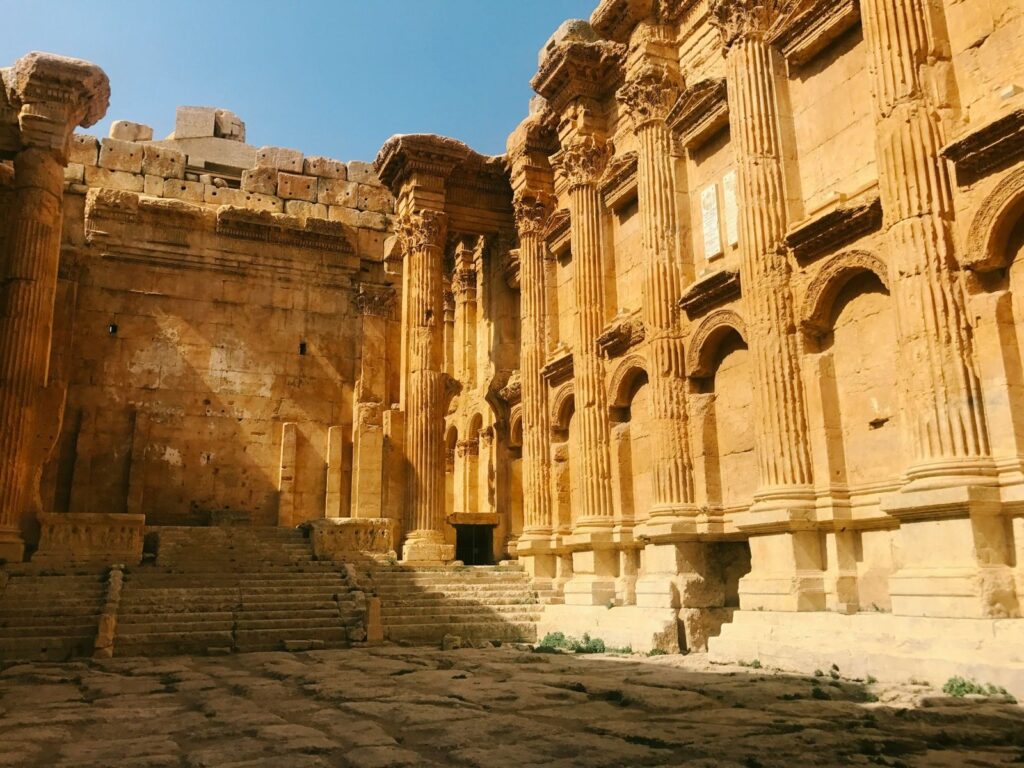
Ancient Roman temple ruins with tall columns and carved stone façade at Baalbek, Lebanon

Baalbek/LB

Category: Cultural Property
Type: Archaeological Site
Criteria: (i)(iv)

Baalbek, or Heliopolis in antiquity, flourished as a major religious center and later developed into a monumental Roman sanctuary dedicated to Jupiter, hosting pilgrims from across the empire and the most impressive Imperial Roman architecture
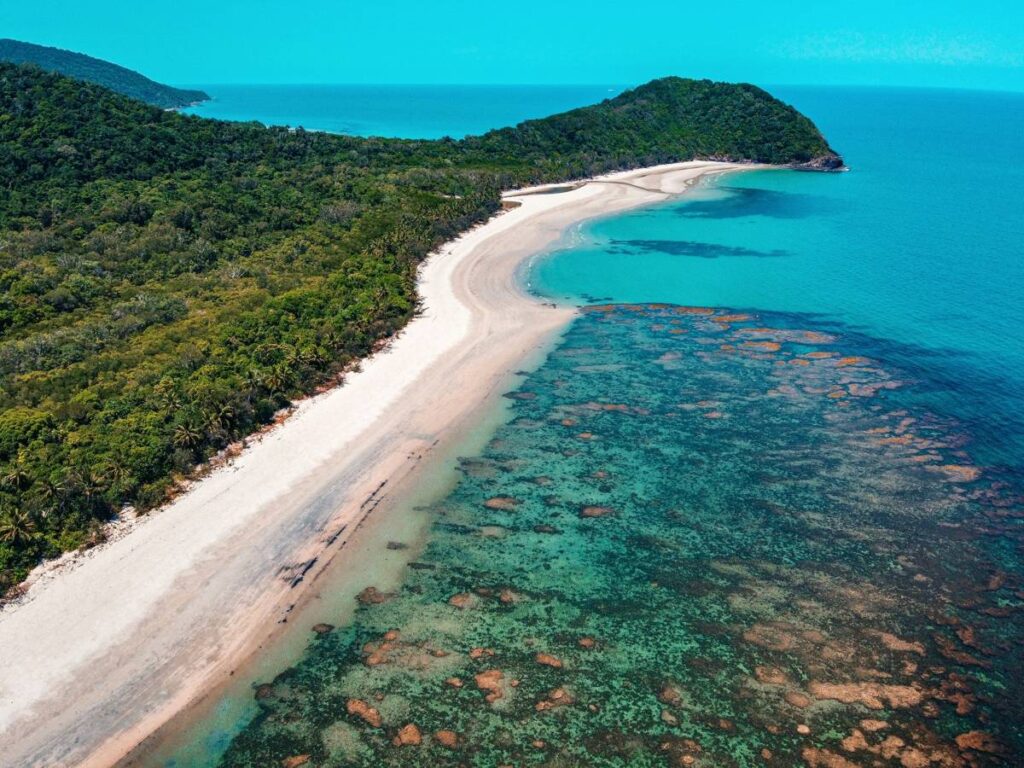
Aerial view of a tropical coastline with sandy beach, forest, and coral reef.

Great Barrier Reef/AU

Category: Natural Property
Type: Ecosystem
Criteria: (vii)(viii)(ix)(x)

The Great Barrier Reef is the world’s largest coral reef system, and it is renowned for its exceptional biodiversity, outstanding natural beauty, and as a habitat for threatened species such as the dugong and green turtle.
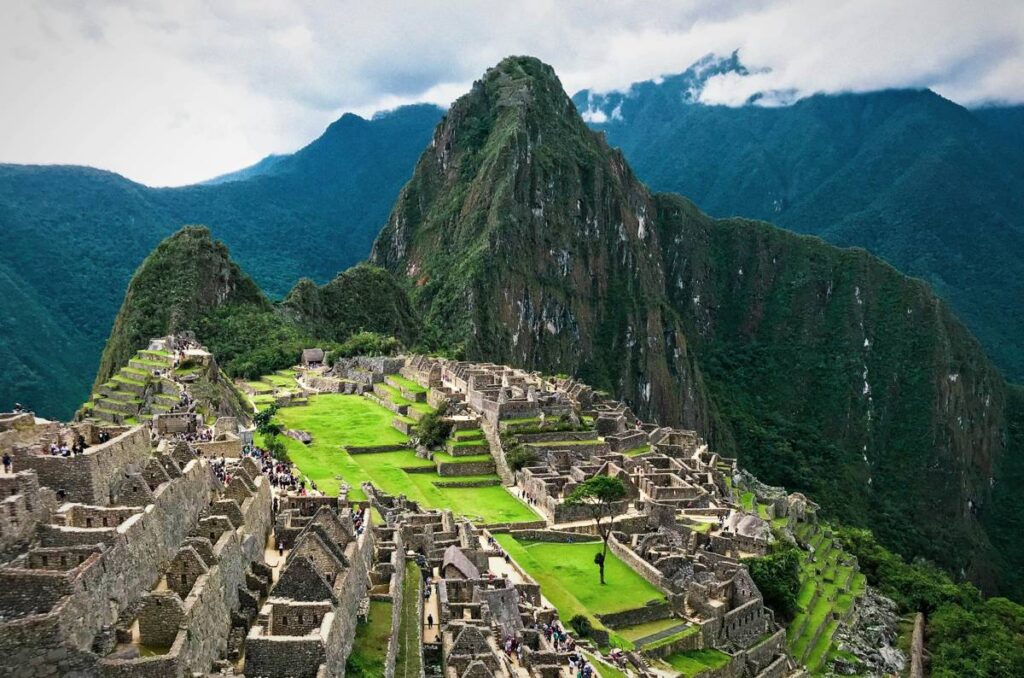
Machu Picchu Inca city in the Andes mountains, Peru.

Machu Picchu/PE

Category: Mixed Property
Type: Architectural land use
Criteria: (i)(iii)(vii)(ix)

Machu Picchu is a 15th-century Inca city set at 2,430 m in a tropical mountain forest, renowned for its integration with the Andean landscape, its advanced engineering, and its exceptional architectural harmony with nature.

Terraced rice fields with a small village in the mountains of the Philippines

Rice Terraces/PH

Category: Cultural Property
Type: Cont. Cultural Landscape
Criteria: (iii)(iv)(v)

Over 2,000 years old, the Ifugao rice terraces follow the mountain contours, reflecting ancestral knowledge, sacred traditions, and social balance, a living cultural landscape expressing harmony between people and nature.
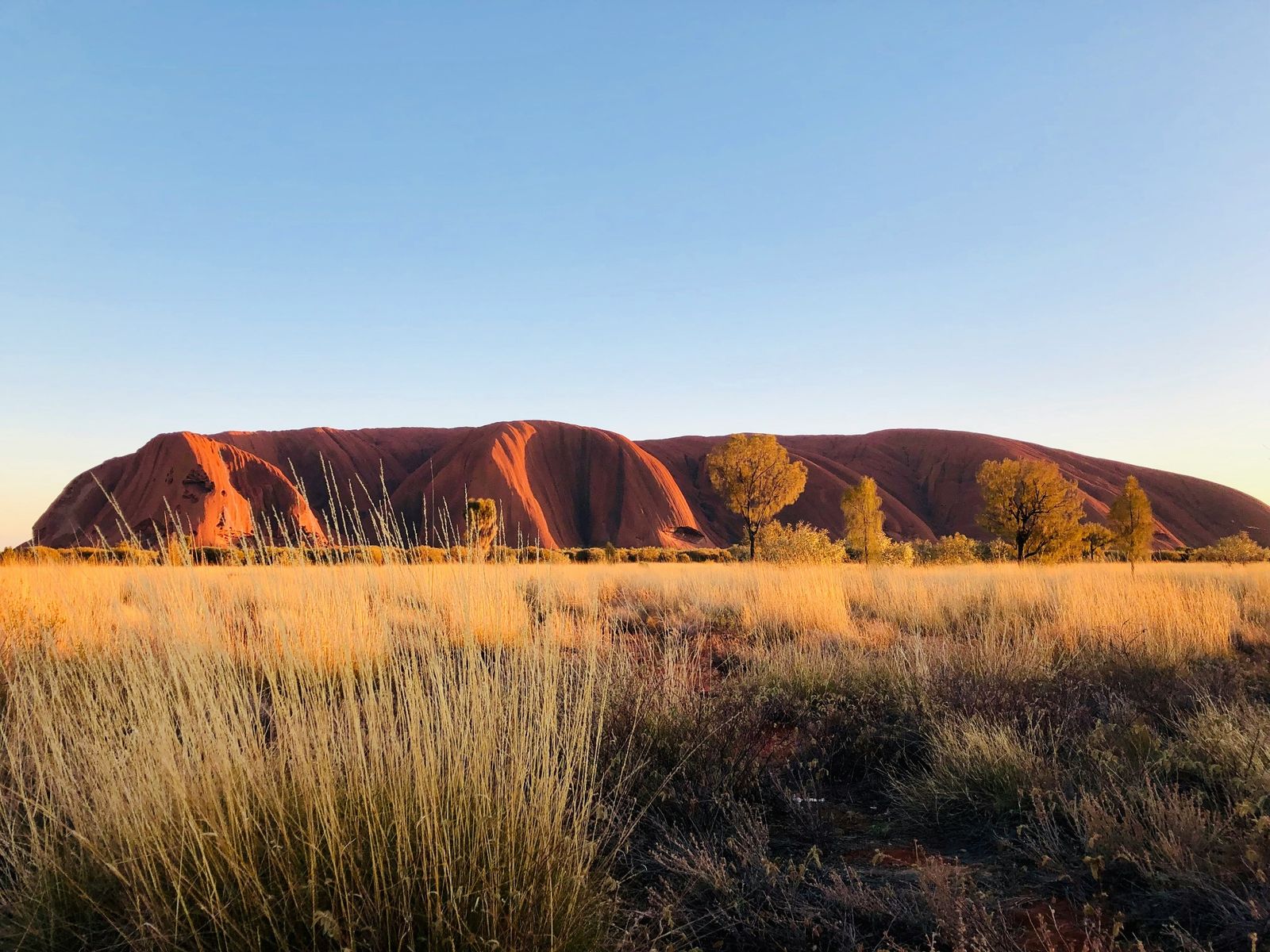
Uluru sandstone monolith rising above golden grassland in the Australian outback at sunset

Uluru-Kata Tjuta/AU

Category: Mixed Property
Type: Assoc. Cultural Landscape
Criteria: (v)(vi)(vii)(viii)

This national park features striking geological formations, including Uluru monolith and Kata Tjuta domes, which hold deep spiritual significance for the Anangu people, one of the world’s oldest living cultures.

A property must meet at least one criterion out of ten criteria to demonstrate Outstanding Universal Value.

Cultural Criteria (i–vi)

  • i
    to represent a masterpiece of human creative genius
  • ii
    to exhibit an important interchange of human values, over a span of time or within a cultural area of the world, on developments in architecture or technology, monumental arts, town-planning or landscape design
  • iii
    to bear a unique or at least exceptional testimony to a cultural tradition or to a civilization which is living or which has disappeared
  • iv
    to be an outstanding example of a type of building, architectural or technological ensemble or landscape which illustrates (a) significant stage(s) in human history
  • v
    to be an outstanding example of a traditional human settlement, land-use, or sea-use which is representative of a culture (or cultures), or human interaction with the environment especially when it has become vulnerable under the impact of irreversible change
  • vi
    to be directly or tangibly associated with events or living traditions, with ideas, or with beliefs, with artistic and literary works of outstanding universal significance. (The Committee considers that this criterion should preferably be used in conjunction with other criteria)

Natural Criteria (vii–x)

  • vii
    to contain superlative natural phenomena or areas of exceptional natural beauty and aesthetic importance
  • viii
    to be outstanding examples representing major stages of earth's history, including the record of life, significant on-going geological processes in the development of landforms, or significant geomorphic or physiographic features
  • ix
    to be outstanding examples representing significant on-going ecological and biological processes in the evolution and development of terrestrial, fresh water, coastal and marine ecosystems and communities of plants and animals
  • x
    to contain the most important and significant natural habitats for in-situ conservation of biological diversity, including those containing threatened species of outstanding universal value from the point of view of science or conservation

*The protection, management, authenticity and integrity of properties are also important considerations. Since 1992 significant interactions between people and the natural environment have been recognized as cultural landscapes.

The Committee acknowledged that cultural landscapes represent the “combined works of nature and of man” designated in Article 1 of the Convention. They are illustrative of the evolution of human society and settlement over time, under the influence of the physical constraints and/or opportunities presented by their natural environment and of successive social, economic and cultural forces, both external and internal.

The Ten World Heritage Criteria

Categories and Subcategories of Cultural Landscapes

Designed Landscapes

Intentionally created by humans, such as historic gardens and parks.

Organically Evolved Landscapes

Landscapes shaped by human activity, such as social, economic, administrative, and/or religious imperative and has developed its present form by association with and in response to its natural environment.

They fall into two sub-categories:

  • Relict (fossil) landscapes: evolutionary process has ended but remains visible.
  • Continuing landscapes: still actively used and evolving.
Associative Cultural Landscapes

Landscapes valued primarily for their spiritual, artistic, or cultural associations with nature, even where material evidence may be limited.

Forms of Nomination and Configuration of World Heritage Properties

Single Property

A World Heritage property composed of a single, continuous area or site representing Outstanding Universal Value (OUV)

Serial Properties

Multiple geographically separate components, historically or functionally linked, expressing together an OUV as a single World Heritage property

Transboundary Properties

Sites extending across the territories of two or more States Parties, jointly nominated and managed cooperatively, forming a single continuous property

Transnational Serial Properties

Multiple components located in several countries, jointly nominated, that together form a single World Heritage property expressing an OUV

Categories of Heritage Properties

1
Tentative List
Each country prepares a list of sites it may nominate. A property must be included at least one year before formal nomination
2
Nomination Dossier
The State Party submits a detailed nomination demonstrating OUV and appropriate protection measures
3
Evaluation
Advisory bodies evaluate: ICOMOS for cultural heritage, IUCN for natural heritage, ICCROM for conservation expertise
4
Committee Decision
The World Heritage Committee may take one of the following decisions: Inscription, Referral, Deferral, or Non-inscription.

Possible Decisions by the Committee

Inscription
The property is added to the WH List as having OUV and the required conditions
Referral
Minor additional information is requested. The SP can resubmit quickly
Deferral
Major revision or additional studies required before reconsideration
Non-inscription
The Committee decides the property does not meet the criteria

The Upstream Process

The Upstream Process is a mechanism encouraging early dialogue between States Parties, UNESCO, and the Advisory Bodies before nominations are formally submitted, improving quality and reducing unsuccessful submissions.

  • Improve the quality of nomination dossiers
  • Strengthen protection and management frameworks
  • Identify potential challenges early
  • Ensure sites clearly demonstrate OUV

Annual Nomination Cycle

The nomination process follows a fixed annual cycle coordinated by the World Heritage Centre. Overall, the process takes approximately 18 months from submission to decision.

Submission Deadline

1 February

Nomination dossiers submitted by the State Party to UNESCO for evaluation and consideration

Completeness Check

Feb – March

The WHC verifies that the nomination dossier is complete and has all the documentation

Evaluation

Mar – May (Year 2)

ICOMOS / IUCN evaluate including expert missions and comparative analysis

Committee Decision

Jun – Jul (Year 2)

The World Heritage Committee session takes the final decision on inscription

Urgent Requests & Emergency Situations

When a World Heritage property faces serious and immediate threats, the process can be accelerated. States Parties can submit urgent requests at any time, for example, due to armed conflict, natural disaster, or major development pressures.

The World Heritage in Danger List identifies sites facing serious threats. The objective is not punishment but to mobilize international support and conservation action. Sites can be removed once threats are addressed.

Monitoring & Reporting

Reactive Monitoring

When a World Heritage property faces threats, the World Heritage Committee may request a State of Conservation report. ICOMOS or IUCN may conduct expert missions to assess the situation and recommend actions.

Every six years, States Parties submit periodic reports on the state of conservation of their World Heritage properties and the implementation of the Convention at the national level.

The World Heritage Centre, in cooperation with Advisory Bodies, prepares State of Conservation reports for properties facing significant threats, providing the Committee with updated information for decision-making.

Strategic Frameworks​

UNESCO’ possesses strategic tools to guide the implementation of the World Heritage Convention, such as:

The Five Strategic objectives – 5Cs (2002)

At the 26th session of the World Heritage Committee in Budapest in 2002, four strategic objectives were adopted to strengthen the implementation of the World Heritage Convention:

  1. Credibility – Ensure the World Heritage List is representative, balanced, and credible.
  2. Conservation – Guarantee effective protection and management of inscribed sites.
  3. Capacity-Building – Provide training, resources, and knowledge-sharing to strengthen heritage management worldwide.
  4. Communication – Raise awareness, promote understanding, and engage the public in heritage protection.
  5. These four objectives became known as the “Four Cs.”

The Fifth C: Communities (2007)

In 2007, at the Christchurch session of the World Heritage Committee, a fifth strategic objective was added: Communities.

because it became increasingly clear that heritage protection cannot succeed without the active involvement of local populations. Sites are not just monuments or landscapes; they are living places tied to identity, memory, and daily life.

Global Strategy (2002 Budapest)

The Global Strategy for a Representative, Balanced, and Credible World Heritage List is designed to identify and address major gaps in the current World Heritage List. Its goal is to ensure that the List reflects the full diversity of the world’s cultural and natural heritage. To achieve this, the strategy encourages more countries to become State Parties to the Convention, supports them in preparing comprehensive Tentative Lists, and promotes nominations that highlight underrepresented regions, themes, and heritage types. By broadening participation and strengthening the quality of submissions, the strategy works toward a truly inclusive and credible World Heritage List that reflects humanity’s shared legacy.

National & Local Actors

National UNESCO Commissions

Advise governments and coordinate UNESCO programs at the national level, including heritage nominations and cultural policies.

Permanent Delegations to UNESCO (Paris)

Represent States in UNESCO decision-making processes, including World Heritage Committee sessions.

National ICOMOS Committees

Bring together heritage professionals contributing conservation expertise, policy advice, and participation in international activities.

National Heritage Authorities

Institutions such as Lebanon’s Directorate General of Antiquities (DGA) are responsible for site identification, nominations, and conservation.

International Institutions

UNESCO logo with stylized temple icon and the text “UNESCO”.

UNESCO

Coordinates the Convention through the World Heritage Centre in Paris, managing nominations, monitoring, and reporting
UNESCO World Heritage emblem with circular symbol and central diamond.

WH Committee

21 States Parties elected by the GA. Decides on inscriptions, monitors conservation, manages the WH Fund
ICOMOS logo with stylized horse emblem and the text “ICOMOS”.

ICOMOS

Evaluates cultural heritage nominations, does field missions and conservation recommendations as per Article 8 of the convention

IUCN logo in blue with the text “IUCN”.

IUCN

Evaluates natural heritage nominations and monitors natural World Heritage properties as per Article 8 of the convention

Black-and-white ICCROM logo with circular emblem and the text “ICCROM”.

ICCROM

Provides conservation training, research, technical expertise, and capacity building as per Article 8 of the convention

From Identification to Inscription: The World Heritage Nomination Process

1

Identification

→ By Site Managers, Experts, Local Authorities, ICOMOS Members

2

State Party (Ministry / Competent Authority)

→ Decides to nominate

→ Places on Tentative List

→ Leads the nomination dossier

3

Supporting Actors

Throughout the Process:

UNESCO National Commission
→ Coordination, communication, facilitation

National ICOMOS Committee
→ Scientific advice, peer review, expertise

Permanent Delegation to UNESCO (Paris)
→ Diplomatic interface, formal communication

4

State Party Finalizes Dossier

Submission
→ UNESCO World Heritage Centre

Evaluation
→ ICOMOS / IUCN / ICCROM

World Heritage Committee
→ Decision (Inscription / Referral / Deferral / Non-inscription)

Costs and Resource Implications of World Heritage Nominations

UNESCO does not charge fees for submitting World Heritage nominations. However, the real cost lies in the preparation of the nomination dossier and the long-term management of the property, which can range from tens of thousands to several hundreds of thousands of USD, depending on the scale and complexity of the site.

Why Costs Vary

The level of investment required depends largely on the nature of the property:

Scale and complexity

Smaller cultural sites may require limited documentation, while large, mixed, or transnational properties involve extensive research, coordination, and technical studies.

Technical requirements

Nominations require detailed mapping (GIS), comparative analyses, conservation assessments, and management plans aligned with UNESCO standards.

Administrative coordination

Complex nominations often involve multiple ministries, institutions, and international experts.

Stakeholder engagement

Community consultations, legal documentation of protection status, and governance frameworks are essential and resource-intensive components.

Language and documentation

Complex nominations often involve multiple ministries, institutions, and international experts.

*While ten languages are recognized for proceedings (Arabic, Bahasa Indonesia, Chinese, English, French, Hindi, Italian, Portuguese, Russian, and Spanish), formal nominations must be submitted in English or French.

Funding Mechanisms

Preparation is primarily funded at the national level, but additional support mechanisms exist:

National budgets

Typically led and financed by ministries responsible for culture, heritage, or environment

UNESCO International Assistance (World Heritage Fund)

Provides targeted financial support for activities such as preparatory studies, capacity building, conservation measures, emergency assistance for threatened sites, and technical cooperation between countries

*While it can contribute to nomination processes, funding is limited and does not cover the full cost of dossier preparation

Partnerships and co-financing

Universities, NGOs, and international donors may contribute to research and documentation

Advisory support

Organizations such as ICOMOS and IUCN provide technical guidance, though preparation costs remain the responsibility of the State Party

Key Considerations

Hidden costs

Translation, mapping, legal frameworks, and long-term management planning can significantly increase overall expenditure

Equity challenges

Countries with greater financial and institutional capacity are often better positioned to prepare nominations, while others rely on external support

Long-term commitment

Inscription is not the final step. It requires sustained investment in conservation, monitoring, and management, often over decades

Key takeaway

A World Heritage nomination is not a simple application, but a major institutional and financial commitment, requiring coordinated expertise, long-term planning, and sustained national support. 

UNESCO - Normative Instruments

UNESCO develops a range of normative instruments that establish international legal frameworks, principles, and policy guidance for heritage protection. These instruments vary in their legal weight, from binding conventions and protocols to non-binding recommendations and declarations.
TypeNatureFunctionBrief Explanation
ConventionsBinding (hard law)Legal frameworkInternational treaties creating rights and obligations for States once ratified.
ProtocolsBinding (hard law)Strengthening conventionsAdditional legal instruments that supplement or reinforce existing conventions.
RecommendationsNon-binding (soft law)Policy guidanceAdopted by the General Conference to guide national laws, policies, and practices.
DeclarationsNon-binding (soft law)Principles and valuesHigh-level texts expressing universal principles without legal obligations.
GuidelinesNon-bindingImplementationPractical tools explaining how to apply conventions (e.g. nomination procedures).
Frameworks / StrategiesNon-bindingPolicy directionTranslate principles into strategic priorities and action plans.
Decisions / ResolutionsGovernance toolsOperational decisionsAdopted by governing bodies (e.g. Committee decisions, inscriptions, policies).
ProgrammesOperationalImplementationInitiatives that apply UNESCO's objectives in practice.

ICOMOS - Doctrinal System

ICOMOS complements UNESCO's normative framework through a body of doctrinal texts developed by heritage professionals and experts. These texts provide theoretical foundations and practical guidance for the conservation and management of cultural heritage worldwide.
TypeNatureFunctionBrief Explanation
ChartersDoctrinal (non-binding)Core principlesFoundational texts defining conservation philosophy and international standards (e.g. Venice Charter).
PrinciplesDoctrinal (non-binding)Thematic guidanceMore focused texts addressing specific topics (e.g. Valletta Principles).
GuidelinesPractical (non-binding)Technical applicationProvide detailed methods and tools for conservation practice and site management.
Doctrinal Texts (general)DoctrinalKnowledge frameworkCollective body of ICOMOS texts shaping heritage theory and professional standards.
Scientific Committee OutputsAdvisory / researchExpertiseReports, recommendations, and studies produced by International Scientific Committees.

Key Doctrinal & Normative Texts

A chronological overview of the most significant conventions, charters, and doctrinal texts that shape international heritage conservation practice.
#YearTextOrganizationTypeNatureFunctionExplanation
11954Hague Convention for the Protection of Cultural PropertyUNESCOConventionBindingLegal protectionEstablishes protection of cultural property in armed conflict and introduces the Blue Shield emblem.
21972World Heritage ConventionUNESCOConventionBindingGlobal frameworkCreates the World Heritage List and system for identifying and protecting cultural and natural heritage of Outstanding Universal Value.
32003Convention for the Safeguarding of Intangible Cultural HeritageUNESCOConventionBindingSafeguarding practicesProtects living heritage such as traditions, knowledge, and cultural practices.
41931Athens CharterOtherCharterDoctrinalEarly principlesOne of the first international texts on conservation of historic monuments.
51964Venice CharterICOMOSCharterDoctrinalFoundational doctrineEstablishes key principles of modern conservation and restoration practice.
61979/2013Burra CharterICOMOS (Australia)CharterDoctrinalPractice frameworkIntroduces the concept of cultural significance as the basis for conservation decisions.
71994Nara Document on AuthenticityUNESCO / ICOMOS / ICCROMDocumentDoctrinalConceptual frameworkExpands the understanding of authenticity across diverse cultural contexts.
82011Valletta PrinciplesICOMOSPrinciplesDoctrinalUrban conservationGuidance on conservation and management of historic cities and urban areas.
92022ICOMOS International Cultural Heritage Tourism CharterICOMOSCharterDoctrinalTourism managementProvides principles for sustainable heritage tourism.
102011Paris DeclarationUNESCODeclarationSoft lawPolicy principlesEmphasizes heritage as a driver of sustainable development.
112017Delhi DeclarationOther (conference)DeclarationSoft lawPolicy directionHighlights heritage's role in democracy and social inclusion.
122019Madrid–New Delhi DocumentOther (conference)DocumentSoft lawGlobal challengesAddresses heritage in relation to climate change, sustainability, and communities.

UNESCO Cultural Convention Ratified by Lebanon

SequenceConventionDate and Place of AdoptionDate of DepositType of InstrumentTheme
1Agreement for Facilitating the International Circulation of Visual and Auditory Materials of an Educational, Scientific and Cultural character with Protocol of Signature and model form of certificate provided for in Article IV10 December 1948,
Beirut Lebanon
12 May 1971AcceptanceCulture
2Universal Copyright Convention, with Appendix Declaration relating to Article XVII and Resolution concerning Article XI6 September 1952,
Geneva Switzerland
17 July 1959AccessionCulture
3Protocol 1 annexed to the Universal Copyright Convention concerning the application of that Convention to the works of stateless persons and refugees6 September 1952,
Geneva Switzerland
17 July 1959AccessionCulture
4Protocol 2 annexed to the Universal Copyright Convention concerning the application of that Convention to the works of certain international organizations6 September 1952,
Geneva Switzerland
17 July 1959AccessionCulture
5Protocol 3 annexed to the Universal Copyright Convention concerning the effective date of instruments of ratification or acceptance of or accession to that Convention6 September 1952,
Geneva Switzerland
17 July 1959AccessionCulture
6Convention for the Protection of Cultural Property in the Event of Armed Conflict with Regulations for the Execution of the Convention14 May 1954,
The Hague Netherlands
1 June 1960RatificationCulture
7Protocol to the Convention for the Protection of Cultural Property in the Event of Armed Conflict14 May 1954,
The Hague Netherlands
1 June 1960RatificationCulture
8International Convention for the Protection of Performers, Producers of Phonograms and Broadcasting Organizations26 October 1961,
Rome Italy
12 May 1997RatificationCulture
9Convention on the Means of Prohibiting and Preventing the Illicit Import, Export and Transfer of Ownership of Cultural Property14 November 1970,
Paris France
25 August 1992RatificationCulture
10Convention concerning the Protection of the World Cultural and Natural Heritage16 November 1972,
Paris France
3 February 1983RatificationCulture
11Second Protocol to the Hague Convention of 1954 for the Protection of Cultural Property in the Event of Armed Conflict26 March 1999,
The Hague Netherlands
8 October 2020AccessionCulture
12Convention on the Protection of the Underwater Cultural Heritage2 November 2001,
Paris France
8 January 2007AcceptanceCulture
13Convention for the Safeguarding of the Intangible Cultural Heritage17 October 2003,
Paris France
8 January 2007AcceptanceCulture

Distinctive Emblems of the 1954 Hague Convention and of its 1999 Second Protocol

Linked to Convention #6 – Convention for the Protection of Cultural Property in the Event of Armed Conflict with Regulations for the Execution of the Convention (1954)

Linked to Protocol #11 – Second Protocol to the Hague Convention of 1954 for the Protection of Cultural Property in the Event of Armed Conflict

Distinctive emblems are established by the 1954 Hague Convention and the 1999 Second Protocol to facilitate the recognition of cultural property protected under these treaties or inscribed on their respective lists. Marking of cultural property with such emblems indicates the cultural value of the property and its protected status under the law. The use of such distinctive emblems helps protect cultural property, deter crimes against it and reduce the risk of unintentional damage, both in peacetime and in the event of armed conflict.

The distinctive emblem of the Convention, also known as the Blue shield emblem, may be used alone to mark cultural property under general protection, or to indicate personnel engaged in its protection or overseeing the 1954 Hague Convention’s implementation. When used alone, the distinctive emblem indicates the general level of protection afforded under international law to all objects, structures and sites qualifying as cultural property. Nevertheless, cultural properties not bearing the distinctive emblem of the Convention are still protected by it.

Blue and white shield emblem marking protected cultural property under the Hague Convention

Blue Shield Emblem

The blue shield emblem may be used as a means of identification of the following:

  • Cultural property
  • Persons responsible for the duties of control
  • Personnel engaged in cultural property protection
  • Identity cards
Three Blue Shield emblems arranged in a triangular formation indicating special protection of cultural property

Triple Blue Shield Emblem

The blue shield emblem shall also be presented three times together to facilitate identifying the:

  • Immovable cultural property under special protection
  • Transport of cultural property
  • Improvised refuges to house cultural property

Blue Shield emblem with red border indicating enhanced protection status for cultural property

Outlined Blue Shield Emblem

The blue shield emblem outlined by a detached external red band is the distinctive emblem for Cultural property inscribed on the International List of Cultural property under Enhanced Protection. It recognizes and identifies cultural property under enhanced protection, particularly during the conduct of hostilities.

Intangible Cultural Heritage of Humanity

Linked to Convention #13 – Convention for the Safeguarding of the Intangible Cultural Heritage (2003)
Lebanon has 3 elements inscribed on the Representative List of the Intangible Cultural Heritage of Humanity.

Picture showing the traditional Lebanese Manouche
A traditional preparation and sharing practice centered on flatbread topped with ingredients such as zaatar or cheese. Beyond its culinary dimension, it reflects social cohesion, daily life, and the transmission of knowledge across generations.
(Photo: © Bernard Jabre / UNESCO)
Arabic Calligraphy
A transnational inscription recognizing the artistic and cultural significance of Arabic script. It encompasses techniques, tools, and aesthetic principles passed down through apprenticeship.
(Photo: © Sleiman Joseph Bou Sleiman / UNESCO)
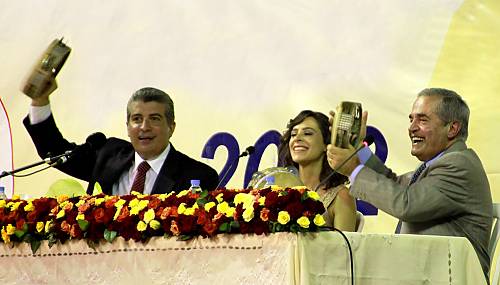
Zajjal
A form of improvised or semi-improvised oral poetry performed in colloquial Arabic, often in a competitive and musical setting. It remains a vibrant expression of social interaction, creativity, and cultural identity.
(Photo: © Joseph-Gérard Tohmé / UNESCO)

Memory of the World Programme

Established in 1992 to safeguard the world’s documentary heritage, such as manuscripts, archives, rare books, and audiovisual materials.

Lebanon in the Register:

Lebanon is represented in UNESCO’s Memory of the World Register by two inscriptions of outstanding documentary significance: the Phoenician Alphabet and the Commemorative Stela of Nahr el-Kalb (Mount Lebanon), both inscribed in 2005.

  • The Phoenician Alphabet is widely regarded as one of the earliest fully developed alphabetic writing systems, laying the foundation for many modern alphabets and marking a major turning point in the history of written communication.
  • The Nahr el-Kalb stelae form a unique corpus of inscriptions spanning over three millennia, left by successive civilizations from Antiquity to the modern period. Together, they constitute an exceptional historical record of the region’s political, military, and cultural transformations.

UNESCO Cultural Conventions Non-ratified by Lebanon

SequenceConventionDate and Place of AdoptionTheme
1Agreement on the Importation of Educational, Scientific and Cultural Materials, with Annexes A to E and Protocol annexed.17 June 1950, Florence ItalyCulture
2Convention concerning the International Exchange of Publications3 December 1958, Paris FranceCulture
3Convention concerning the Exchange of Official Publications and Government Documents between States3 December 1958, Paris FranceCulture
4Universal Copyright Convention as revised on 24 July 1971, with Appendix Declaration relating to Article XVII and Resolution concerning Article XI24 July 1971, Paris FranceCulture
5Protocol 1 annexed to the Universal Copyright Convention as revised on 24 July 1971 concerning the application of that Convention to the work of stateless persons and refugees24 July 1971, Paris FranceCulture
6Protocol 2 annexed to the Universal Copyright Convention as revised on 24 July 1971 concerning the application of that Convention to works of certain international organizations24 July 1971, Paris FranceCulture
7Convention for the Protection of Producers of Phonograms against Unauthorized Duplication of their Phonograms29 October 1971, Geneva SwitzerlandCulture
8Protocol to the Agreement on the Importation of Educational, Scientific and Cultural Materials, with Annexes A to H26 November 1976, Nairobi KenyaCulture
9Multilateral Convention for the Avoidance of Double Taxation of Copyright Royalties, with model bilateral agreement and additional Protocol13 December 1979, Madrid SpainCulture
10Convention on the Protection and Promotion of the Diversity of Cultural Expressions20 October 2005, Paris FranceCulture

Reporting: An Ongoing Legal Obligation

The date of adoption refers to the creation of the Convention at UNESCO level, while the type of instrument such as ratification, acceptance, approval, or accession, and the date of deposit indicate how and when a State formally becomes bound by it.

A
Ratification
A State signs the Convention and then formally confirms it through its internal legal procedures.
B
Acceptance / Approval
Used instead of ratification in some legal systems, with the same legal effect of confirming consent to be bound.
C
Accession/ Approval
A State joins the Convention without having signed it during the initial adoption phase.

People may confuse the following terms; however, they operate at different levels:

  • Adoption (UNESCO decision) à International
  • Ratification / Deposit (State decision) à National Commitment


Upon ratification, acceptance, or accession to a UNESCO convention, States Parties become legally bound by the treaty and are obligated to submit periodic reports on its implementation. These reports detail the laws adopted, policies enacted, and actions taken to fulfill the convention’s provisions. Reporting is a continuous legal duty that follows the formal act of becoming a party to the convention, ensuring transparency and accountability in implementation.

Who Requests & Submits the Reports

Who Requests

  • UNESCO Secretariat or Director-General issues formal requests for reporting.
  • For specific conventions, specialized UNESCO bodies (e.g., World Heritage Centre, Intangible Heritage Committee) organize reporting cycles and deadlines.

Who Submits

  • The responsibility lies with the State Party (the government).
  • Reports are formally transmitted through the Permanent Delegation to UNESCO in Paris.
  • Drafting coordinated by ministries (Culture or Foreign Affairs) and the National Commission for UNESCO.
  • Local site managers, institutions, and experts contribute technical details.

Examples of Reporting Cycles

World Heritage Convention

Periodic Reporting every 6–10 years, plus State of Conservation reports when requested.

Intangible Cultural heritage Convention

Reports every six years on safeguarding measures.

1954 Hague Convention

Reports every four years to the Director-General of UNESCO.

Role of Advisory Bodies (e.g., ICOMOS)

ICOMOS and other advisory bodies (ICCROM, IUCN) review reports, provide technical expertise, and advise UNESCO committees. National ICOMOS committees may assist governments in drafting, but they do not replace the State Party’s legal obligation.

Summary

Reporting under UNESCO conventions is a binding duty of States Parties. Requests are issued by UNESCO (Secretariat, Director-General, or relevant committees) and reports are submitted via the Permanent Delegation in Paris, with drafting coordinated by national ministries and commissions. Advisory bodies such as ICOMOS provide expert review but are not responsible for submission.

;