Temple of Eshmun
At Eshmun, water, architecture, and belief converge to form one of the most enduring sacred landscapes of the ancient Mediterranean.
Historical Significance
The Temple of Eshmun is one of the most important Phoenician religious complexes in the Levant, dedicated to Eshmun, the god of healing. Established in the late 7th century BC, the sanctuary evolved continuously over nearly a millennium, reflecting successive cultural influences from Phoenician, Persian, Hellenistic, Roman, and Byzantine periods. Its architectural layers—including monumental podiums, decorated temples, and later religious structures—illustrate the transformation of sacred space across civilizations while preserving its original spiritual function as a center of healing and pilgrimage.
About the Site
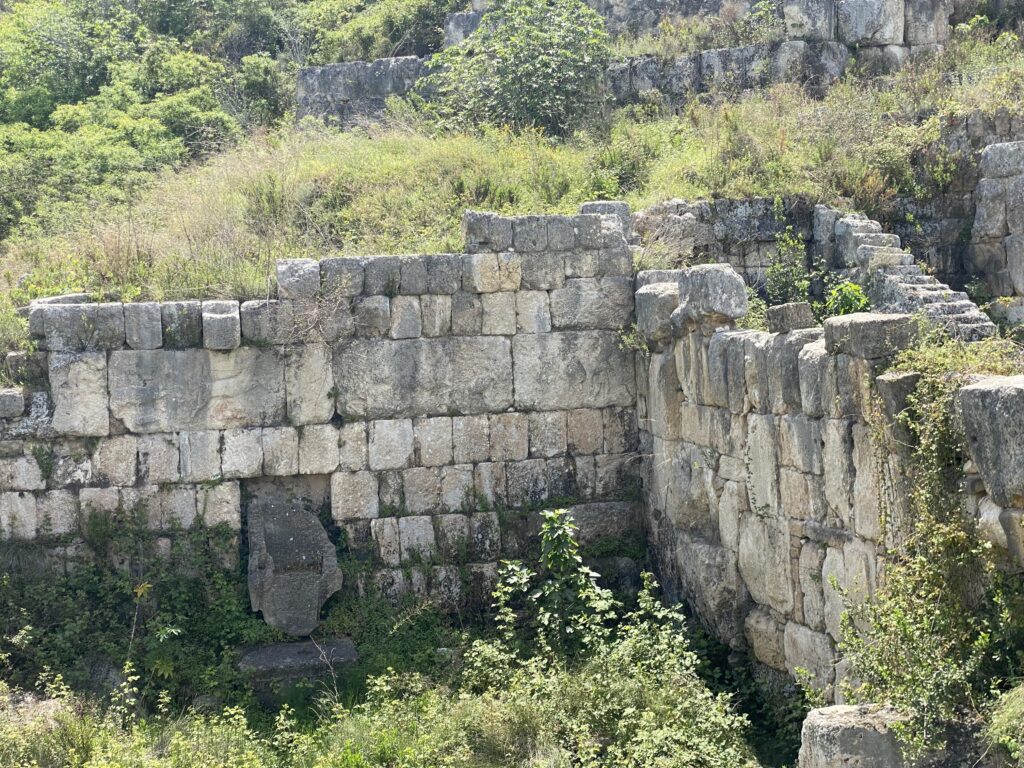
Located near Sidon on the southern bank of the Awali River at Bqosta, the sanctuary extends across approximately 3.6 hectares within a naturally rich setting. The complex includes a sequence of terraces, ritual basins, sacred pools, and processional pathways, all closely integrated with water sources that were central to its healing rituals. Sculpted friezes, architectural remains, and the later addition of a Byzantine church highlight the site’s architectural richness and its continued importance across different periods.
Spiritual and Cultural Context
The significance of Eshmun lies in its role as a healing sanctuary where water, ritual, and belief were inseparable. The integration of natural springs into the sacred architecture reflects ancient conceptions of purification and renewal, attracting worshippers over centuries. Its long continuity of use demonstrates how sacred traditions were adapted rather than replaced, making it a powerful example of spiritual resilience and cultural transformation within a single site.